The Shift from Theory to Infrastructure: Defining Sovereign AI
For the past two years, "Sovereign AI" has been a buzzword circulating in high-level policy circles and boardroom meetings. It was discussed as a theoretical necessity—a way for nations and large enterprises to protect their data sovereignty against the monopolistic grip of a few massive tech providers. However, with the emergence of projects like Apertus, we are seeing this concept move from abstract philosophy into tangible infrastructure.
True sovereignty isn't just about having your data stored in a local data center; it is about owning the weights, the architecture, and the deployment pipeline of the models that process that data. If you have to send your proprietary data to an external API to get an inference result, you aren't truly sovereign—you are simply renting intelligence.
Apertus enters the fray as a foundational layer for this movement. By providing open foundation models, it aims to decouple the capability of high-level AI from the restrictive ecosystems of dominant providers. For engineering leaders, this presents a significant opportunity: the ability to build "walled garden" applications that are still powered by world-class machine learning capabilities.
The Engineering Trade-offs of Independence
While the goal of sovereignty is clear, the path to achieving it involves some very real technical friction. As any engineer who has tried to deploy a large language model (LLM) locally knows, there is no such thing as a free lunch in compute. When you move away from managed services like OpenAI or Anthropic's hosted APIs, you inherit the responsibility for the entire stack.
The primary trade-off here is Local Control vs. Scalable Performance.
When an organization chooses to go "sovereign" using models like those offered by Apertus, they are making a conscious decision regarding their infrastructure overhead:
- Compute Density: To run high-performing open weights models at scale, you need significant GPU resources (H100s/A100s). You must decide if your organization can manage the cooling, power, and networking required for these clusters.
- Model Optimization: Without a managed provider to handle quantization or optimization, your team becomes responsible for ensuring the model performs reliably under production loads.
- Data Residency vs. Latency: Keeping data local is great for security, but if the inference hardware isn't geographically optimized, you may face latency issues that impact user experience.
Naving these trade-offs requires a pragmatic approach. You don't need to build everything from scratch; you need to choose where your "sovereignty" line is drawn. Do you need 100% local control of the weights (Open Source), or is a private instance on a controlled cloud enough?
Strategic Implementation: Moving Beyond the Hype
In my experience as an engineering mentor, I often see teams get paralyzed by the sheer number of tools in the AI space. They want to try every framework, every vector database, and every orchestration layer simultaneously. When building for sovereign needs, this "shiny object" syndrome is dangerous.
If you are looking to implement a solution using Apertus or similar open models, I recommend focusing on one core competency at a time:
- Step 1: Establish the Foundation. Pick your model and get it running in a controlled environment. Don't worry about complex RAG (Retrieval-Augmented Generation) pipelines until you have stable inference.
- Step 2: Secure the Data Pipeline. Focus on how data moves from your internal systems into the local context of the model without ever "leaking" to an external endpoint.
- Step 3: Optimize for Scale. Only once the core loop is secure and functional should you begin optimizing for throughput or multi-user concurrency.
By narrowing your focus, you ensure that the product reaches a Minimum Viable Product (MVP) state faster. You aren't just building an "AI project"; you are building a production-ready system that respects the boundaries of your organization’s data and sovereignty requirements.
If you are looking to move from conceptualizing these complex AI infrastructures to actually shipping a functional MVP, I can help you navigate the technical roadmap and avoid common pitfalls in model deployment. Contact me for MVP consulting to get your project off the ground.
Building a Sustainable Roadmap
The goal of using an open foundation model like Apertus isn't just to be "anti-establishment"—it’s about risk management. For many industries, especially in finance, healthcare, and government, the risk of data leakage is so high that they cannot use public APIs regardless of how good those models are.
To succeed in this space, your leadership team must define what "enough" looks like. Does it mean a model that runs on-premise? Or does it mean a model where you own the weights but run it on a private cloud instance? Once that decision is made, the engineering path becomes much clearer.
Instead of trying to solve every problem at once, focus on the core value proposition: providing high-quality AI outputs while maintaining absolute control over the underlying data and logic. By leveraging open models like Apertus, organizations can build a bridge between cutting-edge machine learning and the rigorous demands of enterprise security.
The transition from "experimental" to "operational" happens when you stop trying to do everything and start perfecting one piece of the stack at a time. Start with your inference engine, master it, and then layer on the complexity of agents, tools, and multi-modal capabilities. This is how you build a sovereign AI infrastructure that lasts.
Authoritative references
Consult Next.js documentation, MDN Web Docs, web.dev, Next.js documentation, OWASP Cheat Sheets alongside the official references block below. Cross-check guidance with your compliance, security, and SRE stakeholders before setting SLOs.
Metrics snapshot
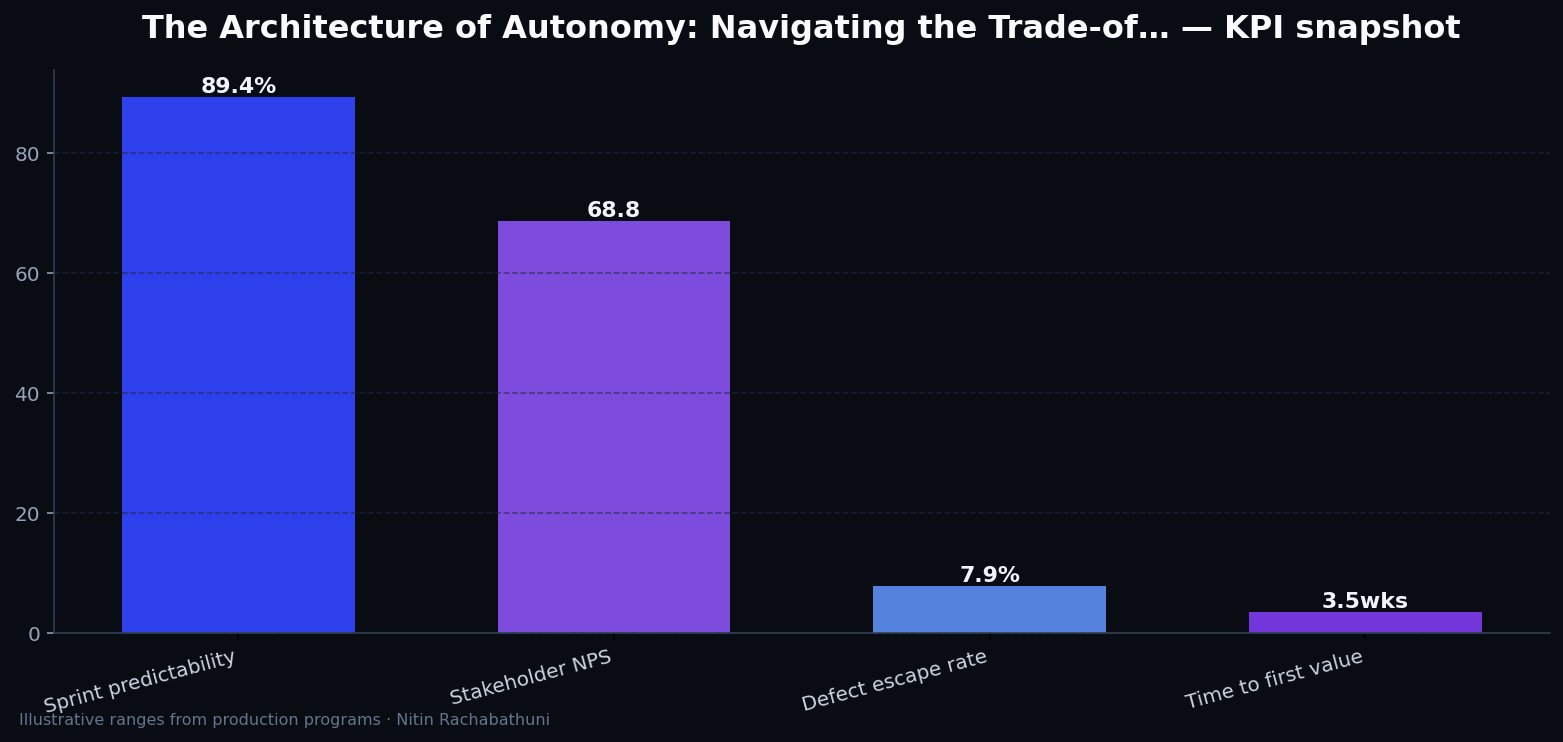
Illustrative consulting KPI ranges observed on programs like “The Architecture of Autonomy: Navigating the Trade-of…” — validate against your own telemetry before setting SLOs. Methodology: production-like staging traces + weekly review with product and ops.
Architecture flow

Code sketches
/* Integration sketch */
// The Architecture of Autonomy: Navigating the Trade-of…
export async function rolloutSovereignAiApertusFoundationModels() {
  const checks = ["telemetry", "auth", "rollback"];
  return { ok: true, checks };
}
Official references
Related on this site
Article slug: sovereign-ai-apertus-foundation-models · Engineering notes by Nitin Rachabathuni — MVP in 2 days specialist.