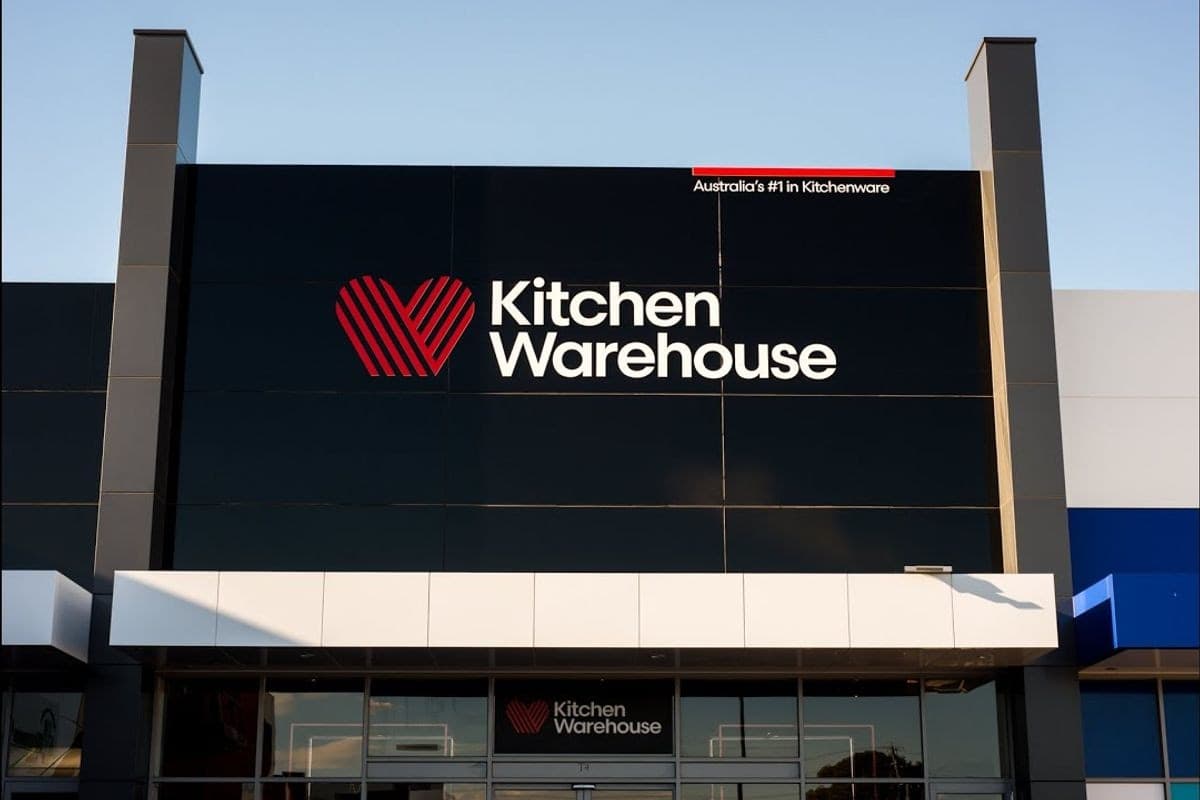








Australia's kitchen & homewares — multi-store headless commerce
Kitchen Warehouse is one of Australia's leading kitchen and homewares retailers. As Lead Developer, I owned the Next.js / Node.js platform on commercetools (multi-store), Strapi CMS, Frontastic Studio page composition, and Algolia — plus automation, agentic workflows, and Datadog observability across a catalog of 10,000+ products.
Platform architecture
Multi-store commercetools
- Channel-scoped pricing, inventory, and promotions across store concepts
- GraphQL middleware between commercetools, Strapi, and the Next.js storefront
- Custom Merchant Center app for order funnels, abandonment analytics, and ops dashboards
Frontastic Studio
- Merchandising teams compose hundreds of page combinations without engineering bottlenecks
- Campaign landing pages, seasonal collections, and promotional modules at scale
- Reusable layout patterns for peak traffic (sales events, new range launches)
Algolia at scale
- Complex Algolia rules — facets, ranking, query rules, and merchandising pins for 10k+ SKUs
- Category-specific relevance tuning for homewares, appliances, and cookware
- Sync pipelines from commercetools product types and Strapi content blocks
Automation & agentic workflows
- n8n orchestration for catalog sync alerts, webhook fan-out, and ops notifications
- Agentic patterns for internal tooling — structured API calls against commercetools with human approval gates
- Datadog dashboards, APM traces, and SLO alerting on checkout, search, and CMS publish paths
Customer identity — Kinde OAuth
We did not build bespoke auth. Customer login and signup run through Kinde as the external OAuth / identity provider:
- Social and email registration flows with Kinde-hosted UX
- OAuth tokens bridged into commercetools customer profiles, wishlists, and order history
- Clear separation: Kinde owns identity; Cybersource / Riskified own payments; commercetools owns commerce state
- Same patterns teams use when evaluating Auth0, Clerk, or Kinde — we shipped Kinde on KWH
Discoverability — SEO, AEO & GEO
Every major release included discoverability work alongside feature delivery:
| Layer | What we shipped |
|---|---|
| SEO | SSR/ISR PLPs & PDPs, canonical URLs, sitemaps, internal linking for 10k+ SKUs |
| AEO | JSON-LD product & breadcrumb schema, FAQ blocks, entity-rich markup for answer engines |
| GEO | Evidence-led copy, structured summaries, and crawl-friendly content for generative search |
| Performance | Core Web Vitals budgets on campaign landers and checkout — tied to Datadog RUM |
Payments, fraud & external integrations
Public checkout (kitchenwarehouse.com.au) advertises Visa, Mastercard, Amex, PayPal, Apple Pay, Google Pay, and Afterpay — delivered AU / NZ / SG. Behind that, the integration surface I owned includes:
| Layer | Integrations | Source |
|---|---|---|
| Payments | Cybersource, Apple Pay, Google Pay, Afterpay, PayPal | Public payment page + engineering |
| Fraud | Riskified — ML fraud screening, chargeback guarantee | Engineering |
| Commerce | commercetools multi-store, Frontastic Studio, Strapi CMS | |
| Search | Algolia (complex rules, 10k+ SKUs) | |
| Observability | Datadog APM/RUM, n8n automation webhooks | |
| Edge | Cloudflare / CDN hardening for campaign traffic |
Each payment method is tokenized and PCI-aware; Riskified sits in the decision path before commercetools order capture.
Technologies used
Next.js, Node.js, commercetools (multi-store), Frontastic Studio, Strapi, Algolia, GraphQL, AWS, Kinde OAuth, Cybersource, Apple Pay, Google Pay, Afterpay, PayPal, Riskified, Datadog, n8n, Cloudflare, SEO / AEO / GEO
Result
A production Australian homewares platform — multi-store headless commerce, rich payment choice, Algolia rules at 10k+ SKU scale, Frontastic-driven page velocity, and observability merchandising teams trust during campaigns.