The Hidden Cost of Convenience: Why Your Rust Enums Might Be Slowing Down Your Interpreter
In the world of systems programming, there is a constant tension between high-level abstractions and low-level machine efficiency. Rust provides some of the most elegant abstractions in modern computing, particularly with its enum type. It allows developers to express complex state machines with safety and clarity. However, as we move into the realm of compiler engineering and interpreter design, these "conveniences" can occasionally incur a hidden tax on performance—specifically regarding memory alignment and register utilization.
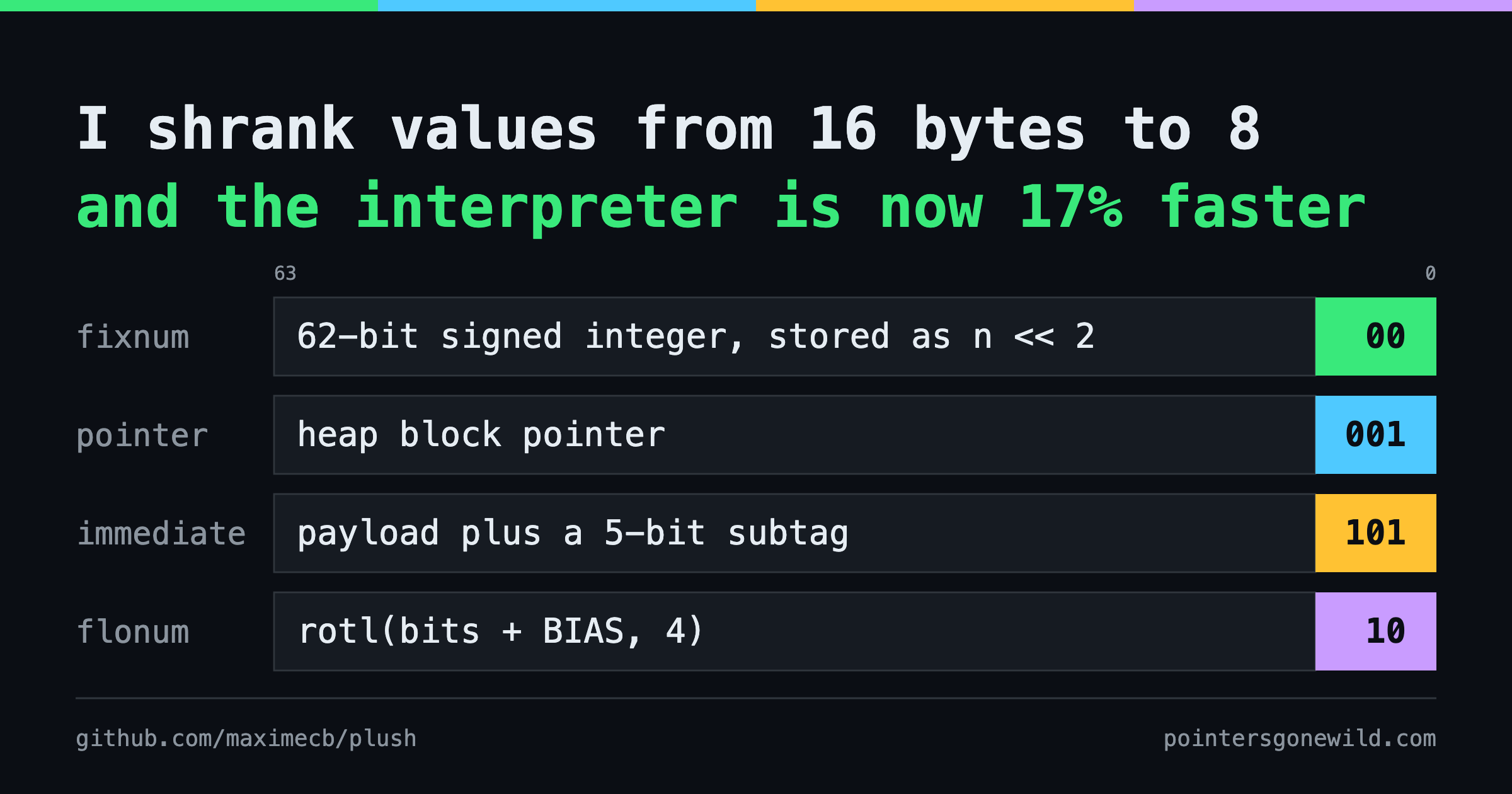
A recent case study in the systems programming community highlighted a striking result: by replacing a standard Rust enum with a packed 64-bit word, an interpreter's execution speed increased by 17%. This isn't just a win for "micro-optimization"; it is a masterclass in understanding how high-level code translates into machine instructions.
The Architecture of the Problem: Tagged Unions and Memory Padding
To understand why the switch worked, we have to look at how Rust handles enums under the hood. An enum is essentially a tagged union. It contains a "tag" (to tell the program which variant it currently holds) and the data associated with that variant.
In many cases, this works perfectly. But in high-performance interpreters, every byte counts. When an enum's structure causes it to exceed certain size thresholds or alignment requirements, the compiler may pad the structure. For example, if a piece of data is logically small but sits within a structure that requires 128-bit alignment, the CPU might have to perform multiple memory fetches or handle "stack spills."
In the case of the interpreter mentioned in the study, the original implementation used tagged enums that resulted in structures being 128 bits wide. Because these values were frequently accessed in the inner loops of the execution engine, they could not fit into a single 64-bit CPU register. This forced the processor to perform more complex operations to access and move data, creating a bottleneck that compounded across millions of instructions.
The Solution: Packing Data into 64-Bit Words
The transition from an enum to a 64-bit word is a shift toward "packed" representations. Instead of letting the compiler decide how much space to allocate for a type based on its highest possible variant, the engineer defines a strict bit-layout. By ensuring that all necessary information—the tag and the value—fits into exactly 64 bits, they ensured that every operation could be performed within a single register.
This change had three primary effects:
- Reduced Memory Footprint: Smaller data structures mean more of them can fit in the L1/L2 cache simultaneously.
- Elimination of Stack Spills: When a value fits in a register, the CPU doesn't have to "spill" it to memory and reload it constantly.
- Improved Branch Prediction: By simplifying the data structure, the logic required to interpret that data becomes more linear for the hardware to pre-fetch.
When you move from 128 bits to 64 bits, you aren't just saving space; you are aligning your software with the physical architecture of the CPU.
Leadership in Engineering: Moving Beyond "Localhost" Optimization
From a leadership perspective, this story serves as a reminder that high-level code is not always the optimal path for production-scale systems. When we lead engineering teams building core infrastructure—like compilers, database engines, or high-frequency trading platforms—we must distinguish between "cleaner" code and "efficient" code.
To achieve these kinds of gains, leadership must encourage a culture of rigorous measurement:
- Production-Shaped Loads: Don't optimize for a single test case. You must run benchmarks against realistic data distributions to see if the 17% gain holds up under stress.
- P95 over Averages: In user-facing paths, averages are often deceptive. We need to look at the tail latency (p95 or p99) to ensure that "edge cases" aren't suffering from cache misses or pipeline stalls.
- Traceability: When experimenting with low-level optimizations like bit-packing, it is vital to version your cache keys and experiment IDs so you can pinpoint exactly which change caused a regression in the field.
The Trade-off: Complexity vs. Performance
Is replacing an enum with a 64-bit word always the right move? No. It introduces complexity. You lose some of Rust's type safety, as you are now manually managing bit-masks and offsets instead of letting the compiler do it for you. This is where engineering leadership becomes critical: deciding when the "cost" of manual management is justified by the "gain" in performance.
In a standard web API or a CRUD application, an enum is almost always the right choice because the bottleneck is usually I/O or database latency. However, in the inner loop of a language interpreter, that 17% gain can be the difference between a tool that feels snappy and one that feels sluggish.
If you are looking to build high-performance systems but need help navigating these complex architectural trade-offs to reach your MVP faster, contact Nitin Rachabathuni for expert guidance in engineering leadership and system optimization.
Summary of Key Takeaways
- Memory Alignment Matters: Even if a value is small, the way it's wrapped can force the CPU to work harder than necessary.
- Register Efficiency: Fitting data into 64-bit words allows for "single-cycle" operations that are significantly faster than multi-step memory fetches.
- Strategic Optimization: Identify your "hot paths." Only trade away type safety and abstraction when it is the primary bottleneck of your system's performance.
Implementation help
Let's align on scope and next steps. Nitin Rachabathuni, Senior Full-Stack Engineer and MVP in 2 Days specialist — technical audits, implementation support, advisory, and flexible hourly collaboration shaped to your product. Reach out anytime; available across time zones and countries.
- Contact form
- Email: nitin.rachabathuni@gmail.com
- WhatsApp: +91-9642222836