The Shift Toward Embodied Intelligence: Analyzing Mistral’s Robostral Navigate
The robotics industry has long been defined by a hardware-first philosophy. To navigate a warehouse, a sidewalk, or a factory floor, robots traditionally required an expensive suite of sensors—LiDAR for 360-degree mapping, depth cameras to calculate distance, and ultrasonic sensors for proximity alerts. The goal was "sensor fusion," where multiple data streams were combined to create a fail-safe map of the physical world.
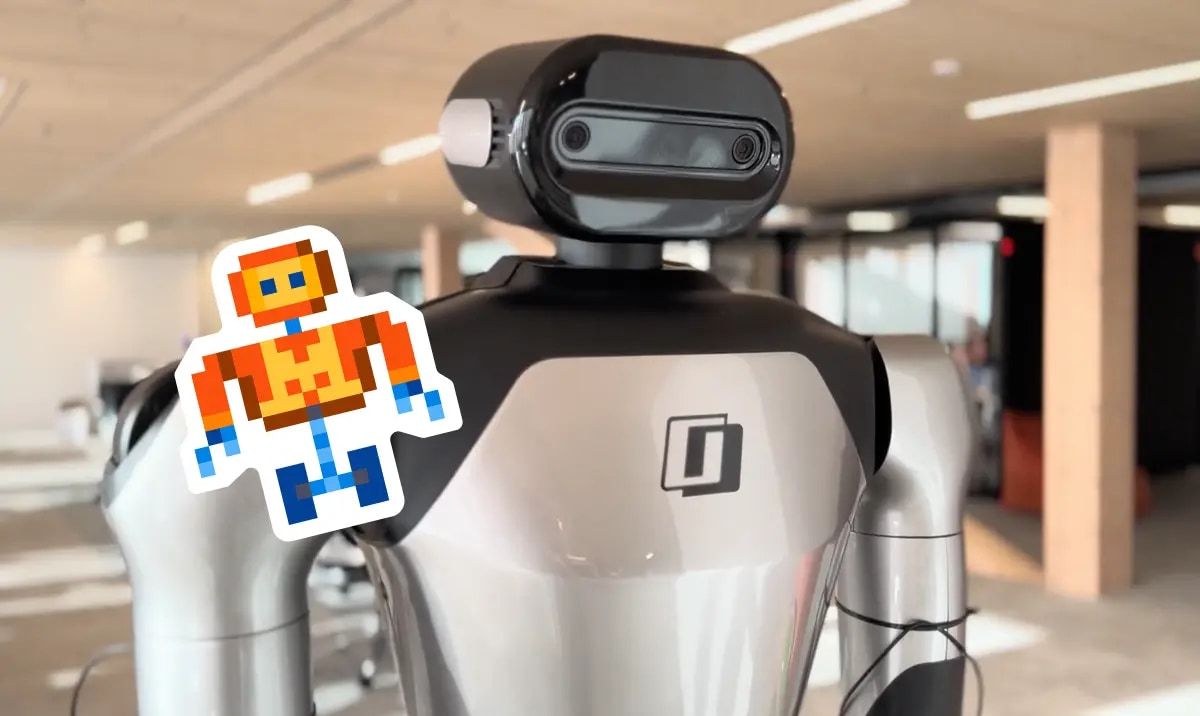
Mistral’s release of Robostral Navigate signals a potential paradigm shift in this architecture. By producing an 8B parameter model that outperforms multi-sensor systems using nothing but a single RGB camera, Mistral is moving the needle toward "Embodied AI." This isn't just a win for computer vision; it’s a fundamental change in how we think about the relationship between intelligence and hardware.
From Sensor Fusion to Semantic Understanding
The core technical achievement of Robostral Navigate lies in its ability to derive spatial awareness from visual data alone. In traditional navigation, if a LiDAR sensor fails or provides "noisy" data due to reflective surfaces (like glass windows), the robot's pathfinding can falter.
By training on high-quality vision datasets and utilizing advanced reinforcement learning, Robostral Navigate learns to interpret the context of an image. Instead of just seeing a point cloud of coordinates, the model understands "this is a hallway," "that is a moving human," or "this surface is navigable." When you move from raw data (LiDAR) to semantic understanding (Vision-based AI), you reduce the hardware footprint while potentially increasing the robot's ability to handle dynamic environments.
For engineers and product owners, this means lower BOM (Bill of Materials) costs for manufacturing robots. If a high-performing navigation model can run on an 8B parameter scale with minimal inputs, the barrier to entry for deploying autonomous systems in "wild" environments—where installing complex sensor arrays is cost-prohibitive—drops significantly.
The Tradeoffs: Software Complexity vs. Hardware Reliability
While the move toward single-camera navigation is exciting, it introduces a different set of engineering challenges that practitioners must account for. When we remove hardware redundancies (like having two ways to "see" an obstacle), the burden of safety shifts entirely onto the model’s reliability and the surrounding software stack.
In production environments, this transition requires a disciplined deployment strategy:
- Model Monitoring: Since the system relies on vision-based inference, any degradation in camera quality (lens smudge, lighting changes) directly impacts navigation logic.
- Edge Case Handling: A multi-sensor system might have physical "fail-safes." A single-camera system requires a robust software layer to handle edge cases where the visual input is ambiguous.
- Inference Latency: An 8B model must be optimized for real-time performance on edge devices. The trade-off here is between the complexity of the vision logic and the speed at which the robot can react to moving objects.
The "win" with Robostral isn't just that it works; it’s that it proves sophisticated navigation can emerge from smart training rather than expensive hardware. However, as we move toward these leaner systems, our deployment pipelines must become more robust to compensate for the lack of physical sensor redundancy.
Implementing Robust AI in Robotics Workflows
For teams looking to integrate models like Robostral into their production pipelines, it is vital to avoid "hype-driven" development. Just because a model performs well on a benchmark doesn't mean it’s ready for an autonomous delivery bot without rigorous testing.
When moving from research to reality, I recommend three specific practices:
- Benchmark on your data: Don't rely solely on the launch blog charts. Run tests using your specific environment's lighting and obstacles.
- Logging & Versioning: Log both the model ID and the specific prompt/configuration version for every production call to ensure reproducibility when a navigation error occurs.
- Canary Deployments: Before rolling out a vision-only system across an entire fleet, deploy it on low-risk endpoints (e.g., internal warehouse testing) to gather real-world telemetry.
If you are looking to move your robotics or AI project from the "proof of concept" phase into a production-ready MVP, I can help you navigate these technical trade-offs and build a scalable architecture. Contact me for MVP development support.
The Future: Is Hardware Ever Obsolete?
The debate now shifts from "Can we do it with one camera?" to "Should we?" While Robostral Navigate proves that high-performing navigation can emerge from smarter models, the role of hardware is not entirely obsolete; rather, its purpose is evolving.
In some environments—such as heavy industrial zones or high-speed logistics—redundancy remains a safety requirement. However, for the vast majority of "soft" robotics applications (retail assistance, hospitality, and urban navigation), the shift toward vision-centric models like Robostral Navigate will likely become the standard. By simplifying the hardware requirements, we enable more agile development cycles and lower costs, allowing AI to inhabit the physical world in ways that were previously too expensive or complex to engineer.
The future of robotics isn't just about better sensors; it’s about smarter models that can interpret the nuances of our world through a single lens.
Implementation help
Let's align on scope and next steps. Nitin Rachabathuni, Senior Full-Stack Engineer and MVP in 2 Days specialist — technical audits, implementation support, advisory, and flexible hourly collaboration shaped to your product. Reach out anytime; available across time zones and countries.
- Contact form
- Email: nitin.rachabathuni@gmail.com
- WhatsApp: +91-9642222836