The Algorithmic Gatekeeper: When ATS Logic Becomes a Filter for Talent
The tech industry has long struggled with the "needle in a haystack" problem of technical recruiting. With thousands of applications pouring into portals daily, many engineering leaders turned to Applicant Tracking Systems (ATS) and automated screening tools to manage the volume. Recently, HackerRank took an unconventional step by open-sourcing their ATS logic—a move that sparked an immediate and sobering conversation about how AI actually "reads" a resume.
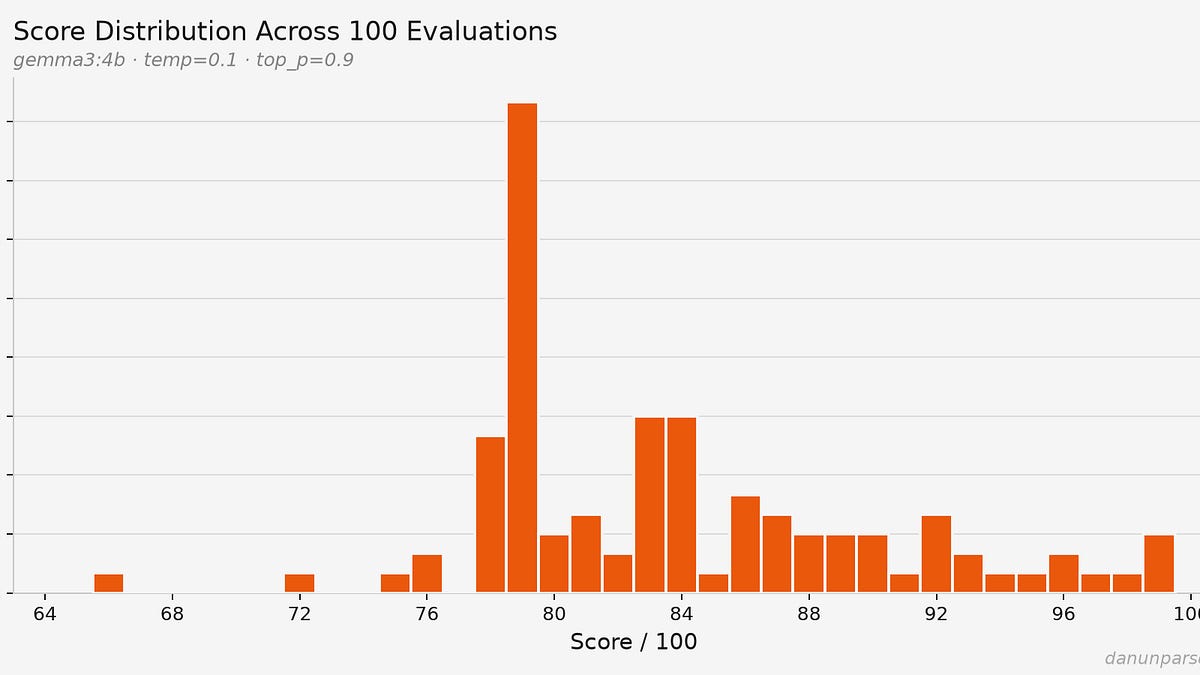
The core of the controversy lies in what happens when you peek under the hood. When testers ran resumes through the system, they didn't get consistent results; they got fluctuating scores (90/100, then 74, then 88). While this might seem like a minor technical glitch or a "glitch in the matrix," it points to a much deeper architectural risk: The Weighting Problem.
When an automated system is tasked with scoring a candidate, it doesn't have human intuition. It follows a mathematical weighting assigned by the developers of the prompt and the underlying model. If that weight is skewed toward "activity" (like GitHub commits or personal projects) rather than "depth" (architectural complexity or years in high-stakes production environments), the system creates an inherent bias against senior engineers who may have spent the last decade building massive, private systems for enterprise clients.
The Risk of Prioritizing Activity Over Expertise
One of the most significant takeaways from the HackerRank open-sourcing is the danger of "Activity Metrics" overriding "Domain Authority." For a junior developer or an early-career engineer, a high volume of public projects and frequent GitHub contributions are great signals. However, for a Senior Staff Engineer who has spent years navigating legacy migrations, optimizing distributed systems, and mentoring teams, their most significant work is often hidden behind corporate firewalls.
If your hiring pipeline relies on an LLM that hasn't been carefully tuned to distinguish between "active hobbyist" and "seasoned expert," you risk filtering out the very people who can solve your hardest architectural problems. The system essentially treats a resume like a keyword-matching exercise, but because it’s powered by an LLM, it tries to infer "vibe" or "momentum."
If the prompt weighting favors recent keywords or specific project counts, the model may perceive a senior engineer with a sparse public profile as less "active," even if their internal impact is massive. This creates a systemic risk where your hiring pipeline becomes an echo chamber for people who are good at optimizing their resumes for algorithms rather than those who have the deepest technical mastery of the craft.
Engineering Best Practices for Automated Hiring Pipelines
If you are currently using or planning to implement LLM-based screening in your recruitment workflow, you cannot treat it as a "set it and forget it" solution. You need to approach this with the same rigor you would apply to any production system. Here is how engineering leaders should audit these tools:
- Benchmark on Prompt & Token Mix: Don't just look at the marketing materials or high-level dashboards provided by your ATS vendor. Demand to see the specific prompts and the token weights used for scoring. If you don't know what weight "years of experience" holds versus "public repositories," you can't be sure who is being filtered out.
- Log Model ID & Prompt Version: Every time a candidate is scored, your system should log exactly which model (e.g., GPT-4o, Claude 3.5 Sonnet) and which version of the prompt was used. This allows you to perform "drift analysis" if you notice that candidates are suddenly getting lower scores after an update.
- Canary Testing: Never roll out a new scoring logic or model update across your entire hiring pipeline at once. Run it on low-risk roles first (e.g., junior positions or non-critical internal roles) to see if the "filter" behaves as expected before letting it gatekeep your core engineering team.
Building for Reliability in an AI-Driven World
The goal of automation should be to remove friction, not to introduce bias. When we automate high-stakes decisions—like who gets a job at a top-tier tech company—we have to account for the "edge cases" that are actually our most valuable hires. A senior engineer with 15 years of experience might have a resume that looks "quieter" than a junior dev's, but their ability to navigate complex system failures is irreplaceable.
To avoid these pitfalls, your team needs to ensure that any AI integration has human-in-the-loop checkpoints or at least highly transparent scoring logic. If the tool provides a score of 74/100, you should be able to see why—was it because they lacked specific keywords, or did the model fail to recognize their tenure?
If your organization is struggling to balance rapid growth with high-quality hiring standards, it's often helpful to have an MVP approach to these internal tools. Instead of building a massive automated gatekeeper from day one, start by automating low-risk tasks and slowly expanding as you validate the logic. If you need help architecting a lean, effective technical roadmap or navigating the complexities of integrating AI into your engineering workflows without losing quality, reach out for MVP consulting to get started.
Summary Checklist for Engineering Leaders
- Audit: Ask your ATS provider for their specific prompt weights and model versions.
- Diversify: Ensure that "experience" is weighted heavily enough to capture senior talent.
- Monitor: Use canary deployments when updating any AI-driven evaluation logic.
- Verify: Periodically run a batch of "known good" resumes through the system to ensure consistency in scoring.
Implementation help
Let's align on scope and next steps. Nitin Rachabathuni, Senior Full-Stack Engineer and MVP in 2 Days specialist — technical audits, implementation support, advisory, and flexible hourly collaboration shaped to your product. Reach out anytime; available across time zones and countries.
- Contact form
- Email: nitin.rachabathuni@gmail.com
- WhatsApp: +91-9642222836