The New Frontier of Visual Intelligence: Understanding GPT-5.6 Sol
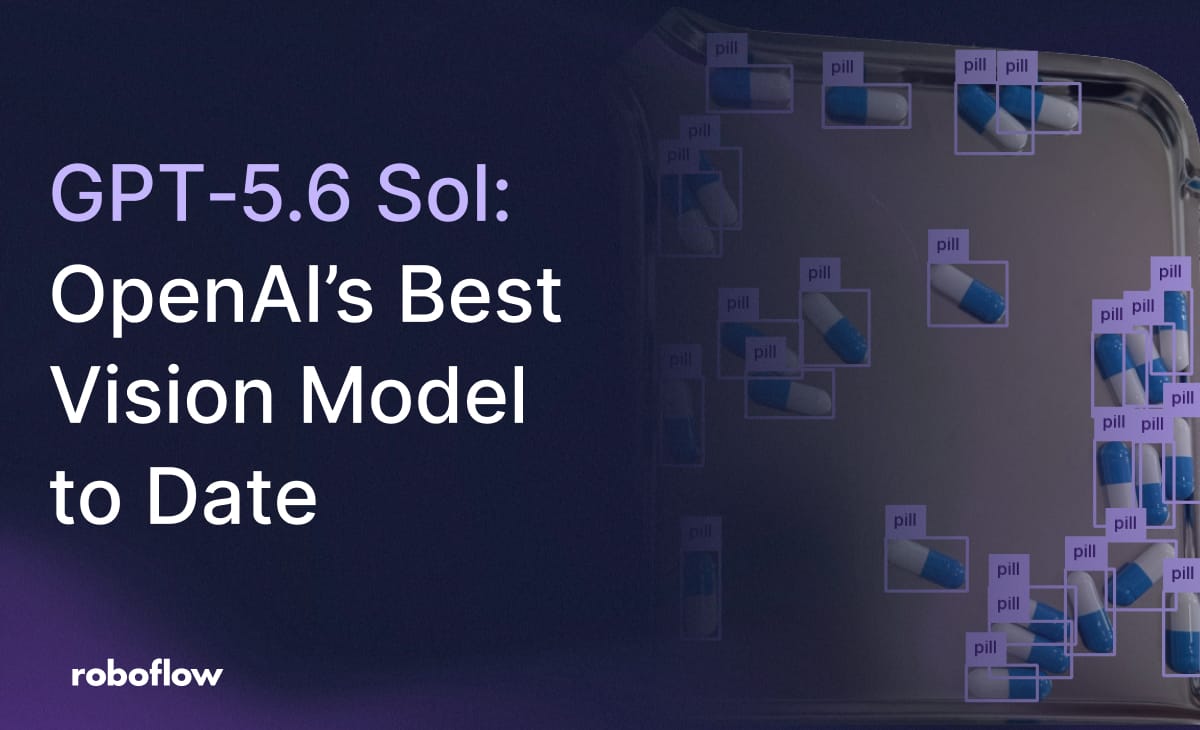
The landscape of multimodal Large Language Models (LLMs) is evolving at a breakneck pace, but few updates have sparked as much technical discussion as the release of the gpt-5.6 lineup. Specifically, the "sol" model has emerged as a significant milestone for OpenAI in the realm of computer vision. While previous models laid the groundwork for understanding images, GPT-5.6 Sol is engineered to bridge the gap between general visual recognition and high-precision industrial applications like object detection and structured data extraction.
For engineers building production-grade systems, this isn't just a "better" model; it represents a shift in how we approach vision tasks within an LLM framework. When a model excels at identifying specific coordinates for objects or extracting tabular data from complex images with high fidelity, it reduces the need for secondary processing layers. However, as with any leap in capability, there is no such thing as a free lunch in AI architecture. The shift toward higher accuracy often correlates directly with increased computational overhead and, consequently, higher token costs.
Understanding where GPT-5.6 Sol fits into your tech stack requires moving past the marketing hype of "better vision" and looking at the concrete engineering trade-offs between raw performance and operational sustainability.
The Engineering Trade-off: Accuracy vs. Cost Efficiency
When evaluating the gpt-5.6 sol model, the most critical decision for a product lead is determining whether your specific use case demands peak accuracy or cost optimization. In many production environments, "good enough" vision is often sufficient—for example, identifying if a person is wearing a helmet in a construction zone might only require moderate accuracy to keep costs low.
However, for tasks such as automated invoice processing, medical imaging analysis, or precise industrial part inspection, the precision offered by GPT-5.6 Sol becomes indispensable. In these scenarios, the higher token cost is justified because it eliminates downstream errors that would otherwise require manual human intervention.
To navigate this, I recommend a tiered approach:
- High-Precision Tier: Use GPT-5.6 Sol for complex data extraction where accuracy is non-negotiable and the volume of requests justifies the premium price point.
- Standard Vision Tier: Utilize previous iterations or smaller models for general categorization or basic image description.
By segmenting your workflows based on the "cost of error," you can optimize your budget while still leveraging the cutting edge where it matters most.
Strategic Implementation and Production Guardrails
Moving from a successful proof-of-concept to a production environment requires more than just picking the right model ID; it requires a robust deployment strategy. When integrating GPT-5.6 Sol into your pipeline, you must account for the fact that vision tokens are priced differently and can accumulate quickly in high-volume environments.
To manage this effectively, I recommend three specific engineering practices:
1. Benchmark on Your Specific Prompts: Do not rely solely on OpenAI’s published benchmark charts. A model might perform exceptionally well on standard test sets but struggle with your unique image types or prompt structures. Run a "Golden Dataset" of 50-100 samples through the model to establish a baseline for both accuracy and cost per successful completion.
2. Granular Logging: Every production call should log not just the output, but the specific model_id and the version of the prompt used. As models are updated and refined, your ability to trace which "version" produced a failure is critical for debugging and iterative improvement.
3. The Canary Strategy: Never flip the switch on an entire fleet at once when moving to a high-cost/high-performance model like GPT-5.6 Sol. Deploy it first to low-risk endpoints or as a "shadow" service where its outputs are compared against your current production model without affecting the end-user experience. This allows you to calculate the true ROI of the higher token costs before committing fully.
Building for Scale: The Path Forward
The release of GPT-5.6 Sol signals a maturing market where we can finally move toward more sophisticated vision-based automation. However, as an engineer, your role is to be the filter between "cutting-edge" and "production-ready." You must ensure that every dollar spent on tokens contributes directly to user value or operational efficiency.
If you are navigating these complex trade-offs and need help building a production-ready MVP that balances high-end AI capabilities with sustainable costs, let's talk about how to architect your next project correctly from day one. You can reach out for specialized guidance at Nitin Rachabathuni’s contact page.
Frequently Asked Questions (FAQ)
Is GPT-5.6 Sol the best vision model OpenAI ever released? Based on current benchmarks, the "sol" variant of the 5.6 lineup is currently recognized as OpenAI's strongest offering for specific visual tasks like detection and data extraction compared to previous iterations.
What are the primary drawbacks of using GPT-5.6 Sol? The main trade-off is a significant increase in token costs across the suite, meaning that while accuracy is higher, the cost per request is also substantially greater than older models.
How should I choose between vision models for my production app? You should evaluate your "cost of error." If high precision in data extraction is required to avoid manual labor, use GPT-5.6 Sol; if general image understanding is sufficient, a more cost-effective model may be the better choice.
Implementation help
Let's align on scope and next steps. Nitin Rachabathuni, Senior Full-Stack Engineer and MVP in 2 Days specialist — technical audits, implementation support, advisory, and flexible hourly collaboration shaped to your product. Reach out anytime; available across time zones and countries.
- Contact form
- Email: nitin.rachabathuni@gmail.com
- WhatsApp: +91-9642222836