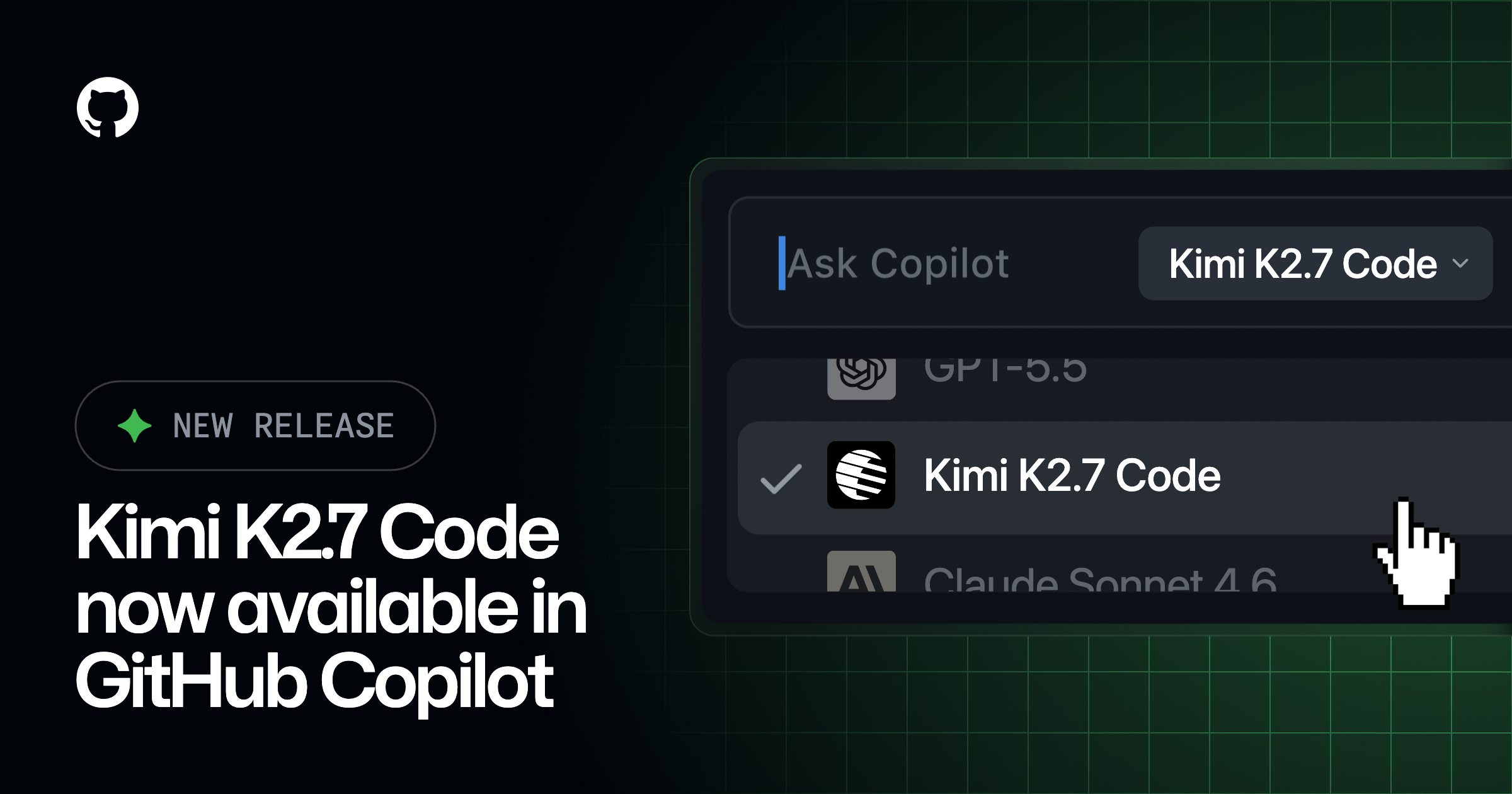
The Shift Toward Model Diversity: GitHub Copilot Integrates Kimi K2.7
The landscape of AI-assisted software development is shifting from a monolithic approach to a multi-model ecosystem. Recently, GitHub announced a significant milestone in this evolution by integrating Kimi K2.7 into the GitHub Copilot model picker. This isn't just another model update; it represents a fundamental shift in how enterprise teams can architect their AI workflows.
For years, GitHub Copilot was synonymous with proprietary models. The introduction of an open-weight model like Kimi K2.7 provides developers and engineering leaders with a new lever: choice. By allowing users to select different "engines" for the same task, GitHub is acknowledging that not every coding workflow requires the exact same capabilities or carries the same cost implications.
Understanding the Value of Open-Weight Models in Production
The primary distinction between proprietary models (like GPT-4o) and open-weight models (like Kimi K2.7) lies in flexibility and predictability. For many engineering teams, "one size fits all" is a risky strategy for production environments.
By integrating an open-weight model into the Copilot ecosystem, GitHub enables several strategic advantages:
- Cost Optimization: Proprietary models often come with higher inference costs or stricter rate limits. Open-weight models can be more cost-effective for high-volume tasks such as boilerplate generation, unit test creation, and documentation updates where "perfect" reasoning isn't required every single time.
- Niche Performance: Different models are fine-tuned differently. A team might find that Kimi K2.7 excels at a specific language syntax or a particular framework logic that the default model handles adequately but not optimally.
- Reduced Vendor Lock-in: By supporting open-weight models, GitHub allows organizations to diversify their AI stack. This reduces the risk of being entirely dependent on one provider's roadmap and pricing structure.
Strategic Implementation: When to Switch?
The question for engineering leaders is no longer "Should we use AI?" but rather "Which model should handle which task?" Integrating Kimi K2.7 into your workflow allows for a tiered approach to software development.
For example, an organization might keep the standard proprietary models as the primary engine for complex architectural decisions and refactoring logic where high-level reasoning is paramount. Simultaneously, they can route routine tasks—such as generating boilerplate code or translating legacy functions into modern syntax—to Kimi K2.7. This "hybrid" approach allows teams to maximize their budget while maintaining high output quality across the board.
However, moving toward a multi-model strategy requires disciplined oversight. You must evaluate your team's specific pain points: Is it speed? Is it cost? Or is it accuracy in a niche library? Having Kimi K2.7 as an option allows you to A/B test these workflows internally before committing to a standard across the entire organization.
Security and Governance in a Multi-Model World
As we move toward more diverse model integrations, security cannot be an afterthought. The inclusion of open-weight models introduces new variables into the "trust" equation. When your team starts mixing different engines, your security posture must evolve accordingly.
To maintain a robust defense while adopting these tools, I recommend three immediate actions:
- Assume Compromise: Treat every integration as a potential entry point. Rotate secrets regularly and ensure that even if an AI-generated snippet contains a vulnerability or a leaked key, the "blast radius" is limited by strict IAM policies.
- Targeted Patching: Don't just follow headlines; identify the specific dependency paths your team actually deploys. If you are using Kimi K2.7 for a specific microservice, ensure that service’s environment is hardened against common injection attacks.
- Tabletop Exercises: Conduct "what if" scenarios. Ask your team: "If this model's output was compromised or it began leaking data on Friday at 6 PM, what is our immediate rollback procedure?"
Building the MVP of Your AI Workflow
Transitioning to a multi-model strategy isn't just about clicking a button in the Copilot picker; it’s about refining your internal processes. You need to identify where Kimi K2.7 provides the most "bang for your buck" and where standard models remain indispensable.
If you are looking to build out an MVP (Minimum Viable Product) that integrates these advanced AI workflows into your production pipeline, I can help you navigate the technical hurdles of integration, security auditing, and workflow optimization. You can reach out for specialized consulting here.
Conclusion
The inclusion of Kimi K2.7 in GitHub Copilot marks a turning point toward "Model Agnosticism" in the developer experience. By giving teams the ability to choose their engine, GitHub is empowering developers to build more efficient, cost-effective, and specialized software. The goal isn't just to use AI—it's to use the right AI for the specific task at hand.
Frequently Asked Questions (FAQ)
What makes Kimi K2.7 different from standard Copilot models? Kimi K2.7 is an open-weight model, which provides developers with more flexibility in terms of cost and specialized performance. While proprietary models are excellent for general reasoning, open-weight models can be optimized for specific coding workflows and higher volume tasks.
Is it safe to use open-weight models like Kimi K2.7 in a corporate environment? Yes, but it requires a proactive security stance. Organizations should ensure that they follow strict secret rotation policies, patch their specific deployment paths, and conduct regular "what if" tabletop exercises to mitigate risks associated with any AI integration.
How does the addition of Kimi K2.7 affect my GitHub Copilot subscription? The inclusion is a feature within the existing Copilot ecosystem. It provides you with more options in the model picker rather than changing your billing structure, allowing you to choose the best engine for different types of coding tasks.
Implementation help
Let's align on scope and next steps. Nitin Rachabathuni, Senior Full-Stack Engineer and MVP in 2 Days specialist — technical audits, implementation support, advisory, and flexible hourly collaboration shaped to your product. Reach out anytime; available across time zones and countries.
- Contact form
- Email: nitin.rachabathuni@gmail.com
- WhatsApp: +91-9642222836