
The Emergence of Visual Obfuscation in the AI Era
As Large Language Models (LLMs) and multimodal systems become integrated into every facet of our digital infrastructure, a new frontier of cybersecurity has emerged: protecting data from being ingested by machines. While traditional methods like CAPTCHAs or rate-limiting have served as hurdles for years, the sophistication of modern computer vision means that "simple" tricks are no longer sufficient to stop automated scraping.
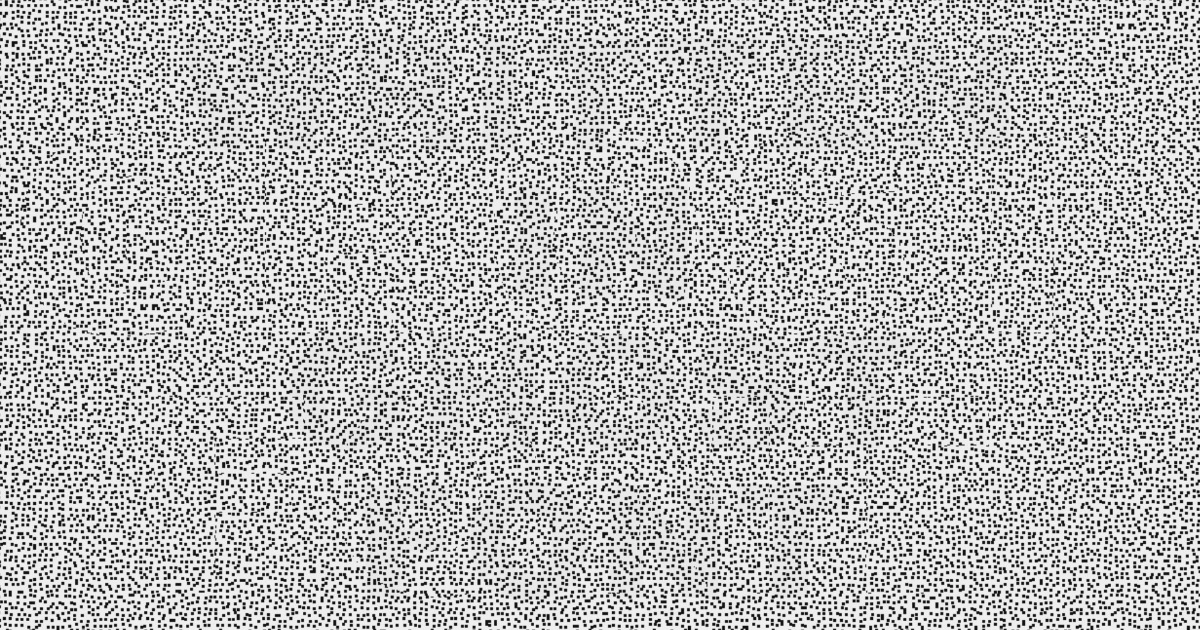
Enter Ghost Font. This isn't just a stylistic choice; it is an intentional engineering tactic designed to exploit the gap between human perception and machine processing. By utilizing specific dot patterns and motion-based cues, Ghost Font creates text that remains legible to a human user but becomes unintelligible—or even deceptive—to an AI model.
This represents a shift toward "visual obfuscation." Instead of trying to block access at the network level (which can be bypassed by sophisticated bots), developers are moving toward making the data itself unreadable to non-human entities. It is a fascinating case study in how we adapt our engineering stacks as machine intelligence becomes more pervasive.
How Ghost Font Works: Exploiting the Gap
To understand why Ghost Font works, we have to look at how models process visual information compared to humans. Humans are incredibly adept at "filling in the blanks." Our brains can ignore minor noise or stylistic inconsistencies to identify a word. For example, if you see a slightly distorted font on a sign while driving, your brain still reads it correctly because of context and pattern recognition.
AI models, particularly those using Convolutional Neural Networks (CNNs) or Vision Transformers (ViTs), process images as mathematical matrices. When Ghost Font introduces specific "noise" patterns—often designed to look like static or minor artifacts to a human—it creates significant noise in the model's feature extraction layer.
When an AI encounters these intentionally engineered visual hurdles, one of two things typically happens:
- Failure to Extract: The model fails to recognize any text at all, treating it as background imagery.
- Hallucination: The model attempts to find a pattern where none exists and "fills in" the gaps with hallucinated decoy messages.
By creating these decoed zones, developers can ensure that if an automated scraper does manage to ingest the image, the data it feeds back into its training set or output is irrelevant garbage rather than sensitive information.
The Engineering Trade-offs: UX vs. Security
In any engineering problem, there is a trade-off. In the case of Ghost Font and similar visual obfuscation techniques, that trade-off is Accessibility vs. Obscurity.
When we make data "AI-proof," we often make it slightly more difficult for humans to consume as well. A font that relies on complex dot patterns or specific motion might require a higher cognitive load from the user. If implemented too aggressively, it could hinder usability for people with visual impairments or those using older hardware where rendering might be inconsistent.
From an MVP (Minimum Viable Product) perspective, you should never implement these technologies as a "blanket" solution across your entire platform. Instead, consider them as targeted defenses:
- High-Risk Endpoints: Use Ghost Font for sensitive data like P1 personal information or proprietary internal documentation.
- Low-Risk Public Content: Avoid it for standard UI elements where accessibility is the priority.
If you are looking to build a robust, secure architecture that balances these complex trade-offs without sacrificing user experience, I can help you navigate the technical hurdles of implementing advanced security layers in your next project. Contact me here for MVP consulting and engineering strategy.
Implementation Strategies for Production Systems
If you are considering integrating visual obfuscation into your production pipeline, do not simply "flip the switch" on a new font style across your entire front end. A disciplined engineering approach is required to ensure stability and security. Here is how I recommend approaching it:
1. Benchmark Your Specific Prompts
Don't rely on the marketing charts of the tool provider. Run internal tests against the specific LLM models you are most concerned about (e.g., GPT-4o, Claude 3.5 Sonnet). Test your "Ghost" text against a variety of prompts to see exactly where the model begins to hallucinate or fail.
2. Log Model IDs and Prompt Versions
When deploying these defenses, it is critical to track which version of the defense was active during specific interactions. If you notice an AI successfully bypassing your obfuscation, you need to know exactly what prompt and model configuration allowed that breach so you can iterate on the "noise" pattern.
3. Canary Deployments
Before moving a new font or obfuscation layer to your entire user base, deploy it as a canary. Test it on low-risk endpoints first. This allows you to monitor for any unintended degradation in human readability before it impacts your primary user experience.
The Future of Data Sovereignty
The rise of Ghost Font signals a broader trend: the "Arms Race" between AI capabilities and data protection. As LLMs become more capable at understanding visual context, our methods of hiding information must become more sophisticated.
We are moving toward a world where "human-only" zones will be defined by these types of technical hurdles. By leveraging nuances in how humans perceive patterns versus how machines calculate them, we can create safer digital spaces. However, the goal should always be to protect the user—not just from bots, but also from overly complex systems that make navigation difficult for everyone.
The ultimate goal is a seamless experience where the technology works silently in the background, ensuring your data remains yours, while your users enjoy a smooth, readable interface.
Implementation help
Let's align on scope and next steps. Nitin Rachabathuni, Senior Full-Stack Engineer and MVP in 2 Days specialist — technical audits, implementation support, advisory, and flexible hourly collaboration shaped to your product. Reach out anytime; available across time zones and countries.
- Contact form
- Email: nitin.rachabathuni@gmail.com
- WhatsApp: +91-9642222836