
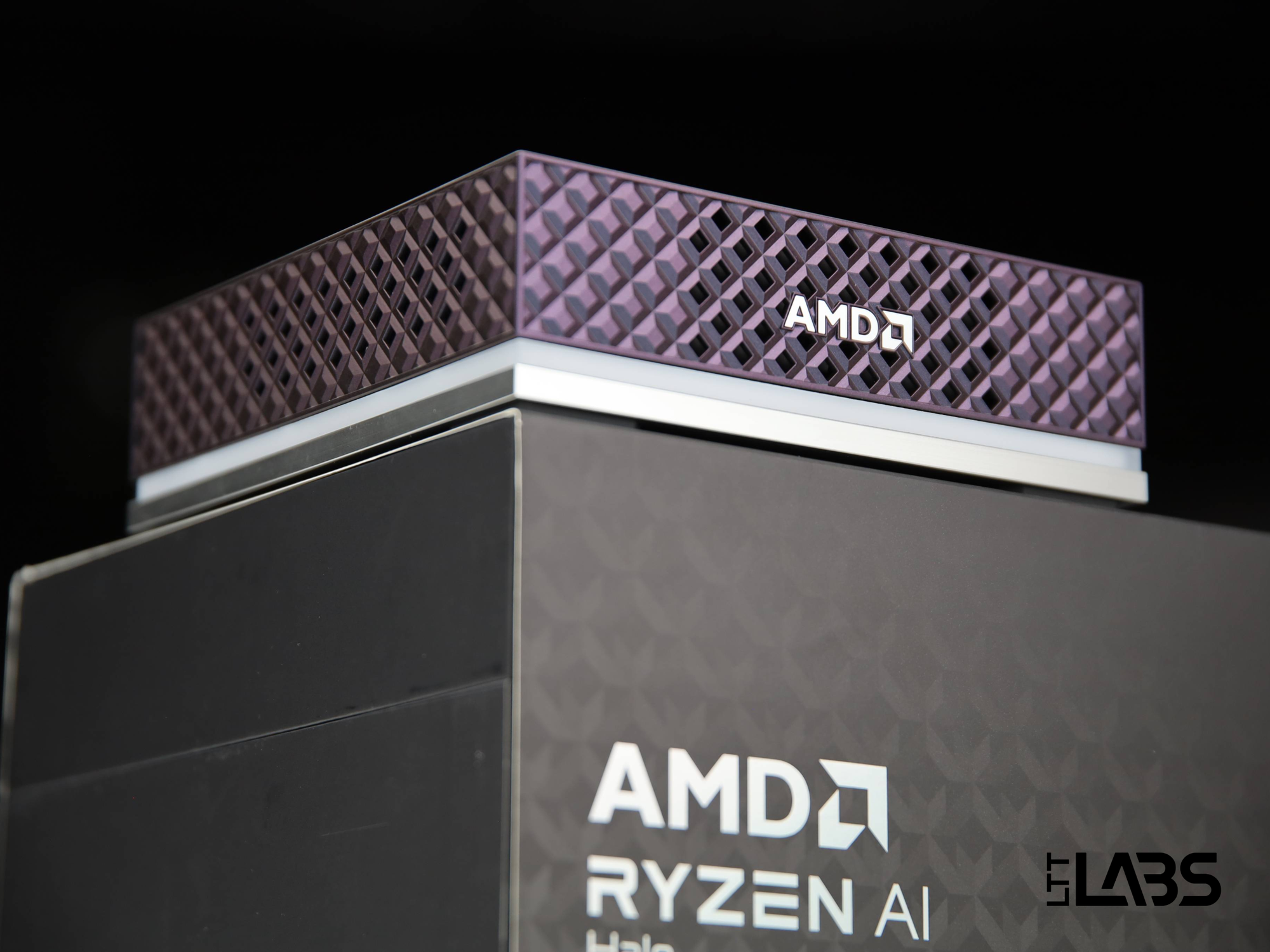
Navigating the Frontier of Local Inference: The AMD Ryzen AI Halo and the Cost of Convenience
The landscape of Artificial Intelligence development is shifting from massive, cloud-centric clusters toward localized inference. As organizations seek to reduce latency, lower costs, and improve data privacy, the "Edge" isn't just a buzzword—it’s becoming a strategic requirement. Into this space enters the AMD Ryzen AI Halo: a $4,000 development kit designed specifically to streamline local AI workflows using ROCm and high-bandwidth unified memory.
For engineering leaders, the emergence of such specialized hardware presents a classic architectural dilemma: Do you invest in "curated" environments that offer immediate velocity, or do you build custom infrastructure for maximum flexibility? To decide, we must look past the marketing hype and analyze the concrete trade-offs between convenience, scalability, and technical debt.
The Value Proposition of Unified Memory Architecture
The primary draw of the Ryzen AI Halo is its ability to pack 128GB of unified memory into a compact footprint. In traditional GPU setups (like those utilizing NVIDIA’s CUDA stack), developers often struggle with VRAM limitations, requiring complex multi-GPU "sharding" just to load medium-sized models.
By moving toward a high-bandwidth unified memory architecture, the Ryzen AI Halo simplifies the hardware requirements for local development. When you have 128GB of accessible memory, the barrier to running larger parameter models locally drops significantly. For an engineering team, this means less time spent debugging "Out of Memory" (OOM) errors and more time spent on prompt engineering and model fine-tuning.
However, as a leader, you must recognize what that convenience costs. The $4k price tag isn't just for the silicon; it is a premium for first-party support and pre-configured "best known configurations." You are essentially trading some of your architectural freedom for a stabilized environment where ROCm (AMD’s open software stack) is already tuned to work with the specific hardware.
Engineering Leadership: Metrics That Actually Matter
When evaluating whether to deploy a fleet of these devices or build custom Linux environments, you must ignore the "hero" benchmarks found in launch press releases. A marketing chart showing tokens-per-second on a generic benchmark doesn't tell you how your specific production pipeline will perform.
To make an informed leadership decision, focus on three core pillars:
- Benchmark Your Specific Workload: Don't look at the manufacturer’s numbers. Run tests on your prompt mix and token distribution. If your application requires high-frequency small prompts vs. long-form generation, the performance profile of unified memory may differ significantly from standard H100 clusters.
- Observability is Non-Negotiable: Regardless of whether you use a pre-configured kit or a custom build, every production call must log its Model ID and Prompt Version. In local environments where models might be swapped frequently to optimize for hardware constraints, traceability is your only defense against "hallucination drift."
- The Canary Strategy: Never roll out a new model locally across the entire fleet at once. Use canary deployments on low-risk endpoints to validate that the specific ROCm configuration and local environment are producing consistent results before they hit critical paths.
The Trade-off: Convenience vs. Customization
Choosing the Ryzen AI Halo is an exercise in risk management. A custom Linux build provides ultimate control over every kernel parameter, but it requires a dedicated engineering team to maintain that stack as updates roll out. For many startups and mid-sized firms, this "hidden" labor cost can be prohibitive.
The "convenience" of the Ryzen AI Halo is essentially an outsourced R&D effort by AMD. They have done the heavy lifting of optimizing ROCm for their specific silicon. If your goal is to get a local inference engine running in weeks rather than months, the premium on specialized hardware is often justifiable. However, if you are building a core product that relies on highly bespoke kernel-level optimizations, you may find the "curated" nature of the kit eventually becomes a ceiling for your growth.
If you are looking to navigate these complex technical trade-offs and need help defining an MVP (Minimum Viable Product) roadmap for your AI infrastructure, contact me here to discuss how we can streamline your engineering path.
Strategic Implementation in the Enterprise
When integrating high-spec local dev kits like the Ryzen AI Halo into a corporate workflow, it should be viewed as an accelerator for specific use cases: edge computing, private data processing, and rapid prototyping.
By utilizing these "off-the-shelf" high-performance units, teams can bypass the initial friction of hardware configuration. This allows your highest-paid engineers to focus on what they do best—building features and refining models—rather than troubleshooting driver incompatibilities or memory mapping issues. In the modern AI landscape, speed to market is a competitive advantage that often outweighs the desire for "perfect" custom infrastructure in the early stages of development.
Ultimately, the decision isn't just about hardware; it’s about where you want your team’s cognitive load to go. Do you want them solving ROCm integration bugs, or do you want them perfecting the user experience? The Ryzen AI Halo is a tool designed for those who choose the latter.
Summary of Technical Considerations
To wrap up the evaluation, keep these technical requirements in mind:
- Memory Bandwidth: Ensure the unified memory meets your specific throughput needs for real-time inference.
- Software Stack: Evaluate how well ROCm integrates with your existing Python/PyTorch workflows compared to CUDA.
- Scalability: Determine if a fleet of these units can be managed via centralized orchestration tools or if they will remain "islands" of compute.
By focusing on these metrics, you move from being a spectator of the AI hype cycle to an architect of a sustainable production environment.
Implementation help
Let's align on scope and next steps. Nitin Rachabathuni, Senior Full-Stack Engineer and MVP in 2 Days specialist — technical audits, implementation support, advisory, and flexible hourly collaboration shaped to your product. Reach out anytime; available across time zones and countries.
- Contact form
- Email: nitin.rachabathuni@gmail.com
- WhatsApp: +91-9642222836